Abstract
Bovine trypanosomosis remains one of the most economically important livestock diseases in Ethiopia, particularly in tsetse-infested areas of Abeshige District. Despite long-standing national and regional control programs, limited information exists on farmers’ knowledge, attitudes, and practices in this region information essential for designing community-driven interventions. A cross-sectional survey was conducted from September to November 2025 in five randomly selected kebeles of Abeshige District. A total of 250 livestock-owning households were selected through systematic random sampling. Data on farmers’ awareness, attitudes, and management practices were collected using semi-structured questionnaire. Descriptive statistics were applied, and findings were summarized using tables and figures. Farmers recognized bovine trypanosomosis as the leading cause of morbidity and mortality in cattle. Most respondents (66%) correctly identified tsetse flies (Glossina species) as the principal vector. Frequently reported clinical signs included weight loss, rough hair coat, coughing, and lacrimation. Trypanosomosis was widely perceived as more prevalent during the rainy season due to increased tsetse fly density. Although 97% of respondents acknowledged the disease as a major threat, only 28% were aware of ongoing tsetse control programs. Chemical sprays, pour-on insecticides, and trypanocidal drugs primarily Diminazene aceturate and Isometamidium chloride were commonly used for prevention and treatment. Despite relatively high awareness of trypanosomosis and its clinical manifestation, participation in formal tsetse control programs remains low. Strengthening community engagement, enhancing veterinary service delivery, and improving extension based awareness efforts are recommended for achieving sustainable disease control.
Keywords
Bovine Trypanosomosis, Farmers’ Knowledge, Practices, Tsetse Fly, Abeshige District, Ethiopia
1. Introduction
Livestock production plays a vital role in global agriculture; contributing about 40% of agricultural output and supporting the livelihoods of nearly one billion people worldwide
| [1] | Kristjanson, P. M., Swallow, B. M., Rowlands, G. J., Kruska, R. L., & De Leeuw, P. N. (2005). Measuring the costs of African animal trypanosomosis: The potential benefits of control and eradication. ILRI. |
[1]
. In Ethiopia, livestock are central to the national economy, second to crop production, and provides meat, milk, draught power, manure, and income
| [2] | Gizaw, S., Tegegne, A., Gebremedhin, B., & Hoekstra, D. (2021). Livestock production and productivity in Ethiopia: Trends and prospects. ILRI. |
[2]
. Livestock diseases impose profound economic losses in Ethiopia through mortality, reduced productivity, diminished fertility, poor growth rates, and loss of draught power
| [3] | Donadeu, M., Sones, K., & Bessin, R. (2019). Animal health constraints to livestock productivity in developing countries FAO Animal Production Papers. |
[3]
. Among the major diseases affecting cattle are anthrax, blackleg, brucellosis, foot and mouth disease, trypanosomosis, and parasitic infections
| [4] | Duguma, R. (2020). Impact of livestock diseases on Ethiopia’s agricultural economy. Ethiopian Veterinary Journal, 24(2), 45–56. |
| [5] | Pal, M., Tesfaye, S., & Shibru, G. (2022). Major infectious diseases of cattle in Ethiopia: A review. Journal of Infectious Diseases and Epidemiology, 8(2),.240.
https://doi.org/10.23937/2474-3658/1510240 |
[4, 5]
.
Trypanosomosis, caused by protozoa of the genus
Trypanosoma and primarily transmitted by tsetse flies, severely impacts millions of cattle across sub-Saharan Africa. The disease leads to reduced productivity, infertility, mortality, and high treatment costs
| [1] | Kristjanson, P. M., Swallow, B. M., Rowlands, G. J., Kruska, R. L., & De Leeuw, P. N. (2005). Measuring the costs of African animal trypanosomosis: The potential benefits of control and eradication. ILRI. |
[1]
. In Ethiopia, bovine trypanosomosis is widespread in western and southwestern regions, resulting in major economic losses and limiting the use of fertile land for cropping and grazing
| [6] | Semayat, A., & Maireg, B. (2018). Review on bovine trypanosomosis and its economic impact in Ethiopia. Acta Parasitologica Globalis, 9(1), 16–22. |
[6]
. Five tsetse fly species; namely
Glossina pallidipes,
G. morsitans submorsitans, G. fuscipes, G. tachinoides, and G. longipennis have been recorded in Ethiopia
| [7] | Bitew, M., Abdela, N., & Tolosa, T. (2011). Prevalence of bvine trypanosomosis in selected areas of Jabi Tehenan district, West Gojam Zone, North-West Ethiopia. African Journal of Agricultural Research, 6(1), 16–22. |
[7]
.
The major trypanosome species affecting livestock include
Trypanosoma congolense,
T. vivax, and
T. brucei brucei in cattle,
T. evansi in camels, and
T. equiperdium in horses
| [8] | Getachew, T., Alemu, T., & Habtamu, T. (2014). Review on camel trypanosomosis (T. evansi) and its vectors in Ethiopia. Journal of Veterinary Science and Technology, 5(4), 1000189. https://doi.org/10.4172/2157-7579.1000189 |
[8]
. Reported prevalence in different regions ranges from 13% to 25.5%
| [9] | Robi, D. T., & Diriba, L. (2021). Prevalence of bovine trypanosomosis and associated risk factors in Kindo Koysha district, Southern Ethiopia. Heliyon, 7(12), e08523.
https://doi.org/10.1016/j.heliyon.2021.e08523 |
| [10] | Tadesse, A., Mekonnen, N., & Abebe, R. (2015). Prevalence of bovine trypanosomosis and its associated risk factors in Bambasi district of Benishangul-Gumuz Region, Western Ethiopia. Acta Parasitologica Globalis, 6(2), 80–86. |
[9, 10]
. Nationally trypanosomosis control strategies include insecticide-based vector control (traps and targets, chemotherapeutic drugs) and the sterile insect technique
| [11] | FAO. (2022). Programme Against African Trypanosomosis (PAAT): Tsetse and trypanosomosis control guidelines. Food and Agriculture Organization of the United Nations. |
[11]
. For such strategies to be effective and sustainable, strong community participation and stakeholder coordination are essential
| [12] | Kasozi, K. I., Namayanja, M., & Tamale, A. (2022). Integrated community-based strategies for tsetse and trypanosomiasis control in Africa. Frontiers in Tropical Diseases, 3, 889–901. https://doi.org/10.3389/fitd.2022.889901 |
[12]
. Despite national control programs of trypanosomosis in Ethiopia, local control programs awareness and participation would be low in the Gibe Basin; therefore KAP assessment in Abeshige district is essential for designing effective, community driven interventions.
1.1. Problem of Statement
The Abeshige Woreda is among the districts in the Central Ethiopia adjacent to Gibe Valley, area frequently infested by tsetse fly, a vector for trypanosomosis. As a result animal trypanosomosis is among the prevalent diseases affecting cattle, sheep and goat production and productivity. Adequate research had not been conducted on farmers’ knowledge, attitudes, and practices (KAP) toward the disease in this area. Lack of awareness about transmission, clinical signs, treatment, and prevention strategies may undermine control efforts. Farmers’ KAP is therefore necessary to identify gaps and guide future interventions.
1.2. Significance of the Study
The study helps generate baseline data on community knowledge, attitude and practices for developing effective trypanosomosis prevention programs. It provides essential information for veterinary authorities to design community awareness campaigns against bovine trypanosomosis.
1.3. Objectives of the Study
1.3.1. General Objective
The general objective was to assess the knowledge, attitudes, and practices of farmers regarding bovine trypanosomosis in Abeshige Woreda and identify gaps needing targeted intervention.
1.3.2. Specific Objectives
1) To evaluate farmers’ awareness of bovine trypanosomosis and its transmission.
2) To assess farmers’ attitudes toward tsetse control programs and disease management.
3) To examine prevention and control practices used by farmers against bovine trypanosomosis.
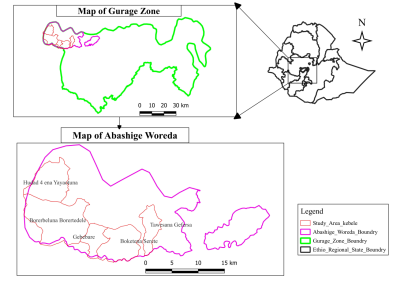
Figure 1. Map of Ethiopia showing the location of the study area.
2. Methodology
2.1. Description of the Study Area
The study was conducted in Abeshige Woreda of the Gurage Zone in Central Ethiopia, located approximately 155 km from Addis Ababa. Geographically the district found approximately in 37°46'47.8''E of longitude and 8°17'18.4''N of latitude. The area lies between 1001–2000 meters above sea level, receives 801–1400 mm of annual rainfall, and experiences mean temperatures of 17.6–25°C. The farming system is predominantly mixed crop-livestock. The district hosts an estimated 267, 442 cattle, 36, 514 sheep, 245, 920 goats, and 67, 616 equines
| [15] | AWSE. (2024). Abeshige Woreda Socio-Economic report. |
[15]
.
2.2. Study Design
A cross-sectional survey was conducted from September to November 2025 in five randomly selected kebeles of Abeshige woreda. The woreda consists of 26 rural and 4 urban administrative kebeles.
2.3. Study Population
The study population included livestock-owning households that had resided in the study area for at least five years. Farmers aged below 18 or above 80 were excluded. Cattle are among the major livestock type kept in the study district. Some of the kebeles of the district are in Gibe valley, known to be infested by tsetse fly.
2.4. Sample Size Determination
Sample size was determined using the Cochran formula for population proportion of an unknown large population
| [13] | Cochran, W. G. (1977). Sampling techniques (3rded.). John Wile & Sons. |
[13]
.
Where 𝑛 = sample size,
P = the proportion of population with knowledge of trypanosomosis (P = 0.8), E = acceptable sampling error (E = 0.05).
n = (1.96)2* 0.8*(1-0.8) / (0.05)2
The calculated sample size was 246, rounded to 250 households considering the highest possible variability of 80% in the response of farmers who are knowledgeable about trypanosomosis, 95% level of confidence, and 5% (0.05) margin of error. Five kebeles were chosen by simple random selection from the woreda list supplied by the Abeshige Woreda Agriculture Office which represents the 26 rural kebeles of the district. Within each selected kebele household lists were obtained from the kebele administrative office. Only selecting five kebeles was because of logistics and resource constraints for sampling depth.
2.5. Sampling Procedure and Data Collection
Systematic random sampling method was used to select households proportionally (household lists from kebele office used; the sampling interval K computed as k=N_k/n_k, where N_k is the number of eligible households in the kebele and n_k is the allocated sample for that kebele; we then select first household randomly then every Kth household interviewed). Sample size was proportionally distributed to five kebeles and 50 householders per kebele were interviewed face to face. Questionnaire development and presenting: the questionnaire was developed from literature, translated into Amharic and Guragigna language, pretested on 20 farmers outside the study kebeles and refined for clarity. Semi-structured questionnaire was developed, pretested and administered to selected study householders to collect data on farmer’s knowledge, attitudes and practices against bovine trypanosomosis. The questionnaire included questions on demography, knowledge/awareness on trypanosomosis, transmission, clinical signs, attitude towards tsetse control programs, and practices on the prevention, treatment, and control.
2.6. Data Management and Analysis
Data collected by questionnaire survey on individual animal owners about knowledge of trypanosomosis and practices on its control methods. Data were entered into Microsoft Excel 2010 and analyzed by using STATA statistical software package version 17. Only descriptive statistics were used and that no inferential tests were performed to analyst farmers’ knowledge, attitude and practice about trypanosomosis, and control methods. Results were presented in tables, figures, and percentages.
2.7. Ethical Considerations
The study involved human participants (livestock-owning farmers). Verbal informed consent was obtained from all respondents prior to data collection. Participation was entirely voluntary, confidentiality of responses was maintained, and no personal identifiers were recorded. The study was conducted in accordance with accepted ethical standards for field-based epidemiological research.
3. Result
A total of 250 livestock owners’ from five kebeles of Abeshige Woreda were participated in the study. The majority were male (82.4%) and the remaining (17.6%) were female. Most respondents (76.8%) belonged to the adult age group (30-70 years) who has long experiences in animal husbandry. All cattle were raised under extensive condition on natural grazing land. All respondents practiced mixed crop–livestock farming system as shown in
Table 1 below.
Table 1. Demographic Characteristics of Respondents (n=250).
Variable | Category | Frequency | Percentage (%) |
Sex | Male | 206 | 82.4 |
Female | 44 | 17.6 |
Age group | 18-29 Years | 58 | 23.2 |
30-70 Years | 192 | 76.8 |
Farming system | Mixed crop-livestock | 250 | 100 |
Most households kept cattle (98%), followed by small ruminants (59.6%) and equines (58.8%). Cattle served mainly for draught power, milk production, income, and manure for fertilizer. Most respondents (86.8%) identified diseases as the primary cause of cattle morbidity and mortality, while (13.2%) of respondents reported that both disease and feed shortage attributed for cattle morbidity and mortality. Trypanosomosis was ranked as the most important cattle disease in the study area (64.4%), followed by bovine pasteurellosis (14.8%), anthrax (7.2%), lumpy skin disease (4.8%) and blackleg (4.4%).
Majority of the participants (91.6%) recognize as trypanosomosis affects mainly cattle and assume as the diseases is more prevalent (49.2) but as the trend of trypanosomosis is decreasing (56%) through time as a result of efforts vector and disease control in the area (
Table 2). Among respondents (66%) correctly recognized tsetse flies as the main vector and transmitter, and (16.4%) mentioned both tsetse and other biting flies were transmitter of the disease. However, 14% of respondents did not know the mode of transmission of the disease.
A majority (82.8%) of participants knew the local name of tsetse fly as (“Yegendi zimb”), while 17.2% of respondent didn’t know local name of tsetse fly. More than half of respondents (55.2%) reported that trypanosomosis is most common during the rainy season, while 27.2% mentioned the dry season but, 17.6% of respondents replied the disease status was similar throughout the year. Similarly, 74.4% stated that tsetse flies were most abundant during the rainy season. But, 9.2% and 16.4% of participants reported after rainy season and during dry season of the year, respectively.
Table 2. Farmers’ Knowledge of Bovine Trypanosomosis and Tsetse Fly in Abeshige District.
Variable | Category | Frequency | Percentage (%) |
Species affected | Cattle | 229 | 91.6 |
Equines | 20 | 8 |
Small ruminants | 1 | 0.4 |
Mode of transmission | Tsetse fly bite | 165 | 66 |
Tsetse & biting flies | 41 | 16.4 |
Do not know | 35 | 14 |
Season of disease occurrence | Rainy season | 138 | 55.2 |
Dry season | 68 | 27.2 |
Both seasons | 44 | 17.6 |
Season of tsetse abundance | Rainy season | 186 | 74.4 |
After rainy season | 23 | 9.2 |
Dry season | 41 | 16.4 |
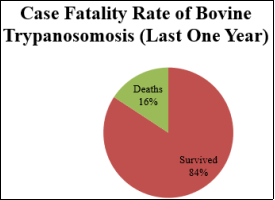
Respondents recognize the occurrence of trypanosomosis in their area for longer years ago and consider as a major constraint of livestock production. Respondents also reported that 416 clinical cases of trypanosomosis during the previous one year, with 78 deaths, yielding an overall case fatality rate (CFR) of 18.75% as shown in
Figure 2 below.
Figure 2. Case fatality rate of bovine trypanosomosis reported in Abeshige district during the last one year (n=416 cases).
All Farmer recognized bovine trypanosomosis, and locally call as “Gendi.” Most farmers (98.8%) correctly identified major clinical signs of the disease and reported ruffled hair (16.9%), coughing (17.9%), death (4.2%), Emaciation (including weight loss and weakness) (44%), lacrimation (16.6%), while the remain 0.4% of respondents didn’t know clinical sign of the diseases as shown in (
Table 3) below.
Table 3. Clinical Signs of Bovine Trypanosomosis Reported by the Farmers.
Clinical signs | Frequency | Percentage (%) |
Emaciation (weight loss & weakness) | 344 | 44.0 |
Coughing | 140 | 17.9 |
Rough hair coat | 132 | 16.9 |
Lacrimation | 130 | 16.6 |
Death | 33 | 4.2 |
Do not know | 3 | 0.4 |
Total | 782٭ | 100 |
٭ Multiple response allowed.
Farmers estimated that trypanosomosis caused a daily loss of 104.5 liters of milk and a total reduction of 679 ploughing hours daily or 2.72 hours per day per farmer which indicate economic crisis of the disease in the study area was high. Only 28.8% of farmers were aware of ongoing tsetse control programs, while the higher proportion (47.2%) of farmers had no awareness of any control activity. But, 24% of farmers were believed that tsetse control programs were ineffective.
Many of the respondents perceived that livestock owners were responsible organ for controlling trypanosomosis. Similarly the government and animal health professionals shared responsibility for controlling the disease respectively. 81.6% of farmers search for veterinary assistance when their cattle get sick, while 18.4% provide injections by themselves. Regarding drug choices, 48% uses Diminazene aceturate and 40.8% were used Isometamidium chloride for treating bovine trypanosomosis.
Table 4. Farmers’ Practices Toward Control of Bovine Trypanosomosis in Abeshige District.
Variable | Category | Frequency | Percentage (%) |
Action for sick animal | Take to veterinary clinic | 204 | 81.6 |
Self-treatment | 46 | 18.4 |
Choice of trypanocidal drug | Diminazene aceturate | 120 | 48 |
Isometamidium chloride | 102 | 40.8 |
| Do not know | 28 | 11.2 |
Participation in tsetse control | Participated | 72 | 28.8 |
Not aware | 118 | 47.2 |
Aware but no participated | 60 | 24 |
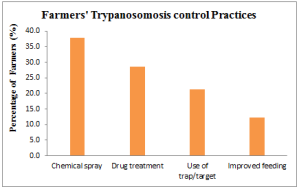
Most of the respondents (37.9%) responded that trypanosomosis is controlled by applying chemical spray or pour on back of animal from hump to tail of animals. But, 28.5% of respondents stated that drug treatment of affected animals by modern trypanocidal drugs used as the second major method for controlling trypanosomosis. Similar to chemical spray, 21.4% responded that the use of targets or traps to kill and reduce tsetse and other biting flies used as controlling method to minimize distribution of disease in animals. Others 12.2% of the respondent stated that improved feeding of affected animals as a method for control of trypanosomosis.
Figure 3. Farmers’ trypanosomosis control practices in Abeshige District.
4. Discussion
The present study revealed that farmers in Abeshige Woreda possess a generally good level of awareness regarding bovine trypanosomosis, consistently ranking it as the leading cause of cattle morbidity and mortality. This finding is comparable to reports from Southern Ethiopia and other tsetse-infested regions, where farmers similarly identified trypanosomosis as a priority livestock disease
| [16] | Mulaw, S., Chanie, M., & Basazinew, B. (2019). Prevalence of bovine trypanosomosis and farmers’ knowledge in Southern Ethiopia. Journal of Veterinary Science and Technology, 10(2), 1–6. |
| [24] | Tadesse, A., et al. (2021). Community perception and prevalence of bovine trypanosomosis in Gumuz, Northwestern Ethiopia. Veterinary Parasitology: Regional Studies and Reports, 25, 100574. https://doi.org/10.1016/j.vprsr.2021.100574 |
[16, 24]
. Farmers accurately described key clinical manifestations of bovine trypanosomosis, including progressive weight loss, rough hair coat, coughing, and lacrimation. These symptoms correspond with classical descriptions in veterinary literature and with reports from previous epidemiological studies
| [18] | Temesgen, Z., Duguma, R., & Feyissa, T. (2020). Clinical signs and associated risk factors of bovine trypanosomosis in Ethiopia. Ethiopian Veterinary Journal, 24(2), 87–98. |
[18]
.
All respondents were familiar with trypanosomosis and referred to it locally as “Gendi”. Approximately two-thirds (66%) correctly identified tsetse flies as the primary vector, consistent with findings from Southern Ethiopia
| [17] | Teka, A., Terefe, G., & Mekuria, S. (2020). Farmers’ knowledge, attitude and practices towards tsetse and trypanosomosis in Southern Ethiopia. Tropical Animal Health and Production, 52, 2265–2274.
https://doi.org/10.1007/s11250-020-02262-0 |
[17]
. The relatively high awareness observed may be attributed to the endemicity of the disease and the presence of periodic vector-control interventions in the area. However, the remaining proportion of farmer’s demonstrated incomplete knowledge of transmission pathways, underscoring the need for strengthened community-level education and extension services. This proportion is comparable to the findings reported that 69.2% of farmers in Southern Ethiopia recognized the tsetse fly as the major vector
| [17] | Teka, A., Terefe, G., & Mekuria, S. (2020). Farmers’ knowledge, attitude and practices towards tsetse and trypanosomosis in Southern Ethiopia. Tropical Animal Health and Production, 52, 2265–2274.
https://doi.org/10.1007/s11250-020-02262-0 |
[17]
.
Farmers also reported that the risk of trypanosomosis increases during the rainy season. This perception is consistent with previous studies which show that tsetse fly density is generally higher during wet conditions due to the availability of favorable vegetation cover and humidity required for the survival and reproduction of Glossina species
| [14] | Duguma, R., et al. (2015). Seasonal dynamics of tsetse and trypanosomosis in southwestern Ethiopia. Acta Tropica, 150, 111–118. https://doi.org/10.1016/j.actatropica.2015.07.010 |
| [17] | Teka, A., Terefe, G., & Mekuria, S. (2020). Farmers’ knowledge, attitude and practices towards tsetse and trypanosomosis in Southern Ethiopia. Tropical Animal Health and Production, 52, 2265–2274.
https://doi.org/10.1007/s11250-020-02262-0 |
[14, 17]
. These findings highlight the need for seasonal vector-control strategies aligned with peak tsetse activity.
Most farmers (97%) perceived trypanosomosis as highly prevalent compared to other livestock diseases, a view consistent with studies conducted in other tsetse-infested regions of Ethiopia such as Dawuro Zone and south-western Ethiopia
| [19] | Tadesse, A., et al. (2017). Prevalence and farmers’ perception of bovine trypanosomosis in Dawuro Zone, Southern Ethiopia. Journal of Veterinary Medicine and Animal Health, 9(8), 98–106. |
| [20] | Kumela, L., Feyissa, B., & Belina, D. (2020). Bovine trypano somosis: prevalence and associated risk factors in southwestern Ethiopia. Journal of Parasitology Research, 2020, 1–8.
https://doi.org/10.1155/2020/9467658 |
[19, 20]
. While more than half of the respondents believed that disease prevalence has declined in recent years possibly reflecting on going control initiatives, a perception also reported in Benchi Maji
| [21] | Finote, A., Abebe, G., & Shibeshi, Z. (2021). Farmers’ perception and prevalence of bovine trypanosomosis in Benchi Maji Zone, Southwestern Ethiopia. Heliyon, 7(4), e06789.
https://doi.org/10.1016/j.heliyon.2021.e067 |
[21]
. Others reported that the situation remained unchanged, suggesting uneven intervention effectiveness, which is consistent with the observations from western Ethiopia
| [22] | Mekonnen, A., Hailu, A., & Feyera, T. (2018). Knowledge and practices towards tsetse and trypanosomosis in western Ethiopia. Ethiopian Journal of Animal Production, 18(2), 37-48. |
[22]
.
Only a small proportion (28%) of respondents was aware of or involved in formal tsetse control programs due to inadequate extension services, insufficient community mobilization, and weak integration between governmental and local stakeholders. Limited participation in such activities has also been documented with weak community participation and insufficient extension services in western Ethiopia
| [22] | Mekonnen, A., Hailu, A., & Feyera, T. (2018). Knowledge and practices towards tsetse and trypanosomosis in western Ethiopia. Ethiopian Journal of Animal Production, 18(2), 37-48. |
[22]
. Farmers generally understood that livestock owners, government authorities, and animal health professionals share responsibility for trypanosomosis control, a perception comparable to studies from south western Ethiopia and Benchi Maji
| [20] | Kumela, L., Feyissa, B., & Belina, D. (2020). Bovine trypano somosis: prevalence and associated risk factors in southwestern Ethiopia. Journal of Parasitology Research, 2020, 1–8.
https://doi.org/10.1155/2020/9467658 |
| [21] | Finote, A., Abebe, G., & Shibeshi, Z. (2021). Farmers’ perception and prevalence of bovine trypanosomosis in Benchi Maji Zone, Southwestern Ethiopia. Heliyon, 7(4), e06789.
https://doi.org/10.1016/j.heliyon.2021.e067 |
[20, 21]
. Strengthened multi-stakeholder collaboration is therefore essential for effective, sustainable vector-control strategies.
With regard to disease management, farmers reported the use of chemical spraying, trypanocidal treatment, traps or targets, and improved feeding. Encouragingly, most farmers to seek veterinary support for treatment contrasts with patterns observed elsewhere, such as in Gamo Gofa, where self-treatment was common
| [25] | Yalew, A., Dinka, H., & Wudu, T. (2019). Livestock disease recognition and treatment practices among farmers in Gamo Gofa Zone, Southern Ethiopia. International Journal of Livestock Research, 9(7), 120–130. |
[25]
. The trypanocides most frequently reported Diminazene aceturate and Isometamidium chloride are consistent with drugs widely used in Ethiopia and neighboring countries
| [19] | Tadesse, A., et al. (2017). Prevalence and farmers’ perception of bovine trypanosomosis in Dawuro Zone, Southern Ethiopia. Journal of Veterinary Medicine and Animal Health, 9(8), 98–106. |
| [23] | Malele, I., et al. (2018). Use of trypanocides in East Africa: farmer knowledge and drug choice in Uganda. Parasites & Vectors, 11, 454. https://doi.org/10.1186/s13071-018-3012-8 |
[19, 23]
. This highlights potential risks of drug misuse or resistance if proper guidance is not consistently provided
.
Overall, the findings demonstrate that while farmers in Abeshige Woreda possess considerable knowledge about bovine trypanosomosis, persistence of the disease due to limited awareness of formal tsetse control programs, persistent tsetse infestation, inconsistent vector-control coverage, and inadequate community participation in coordinated interventions, heavy reliance on chemical treatments, and the ecological suitability of the Gibe Valley for sustaining Glossina populations. These observations highlight the need for strengthening community involvement, improving veterinary outreach, and enhancing integrated vector-management approaches are essential to achieve sustained disease reduction in the study area.
5. Conclusion and Recommendation
The findings of this study demonstrate that bovine trypanosomosis remains a major constraint to cattle production in Abeshige Woreda, despite farmers’ generally high awareness of the disease, its transmission, and the role of tsetse flies. Farmers consistently ranked trypanosomosis as the most important cattle disease in the area, citing significant economic consequences including reduced productivity, loss of draft power, mortality, and increased treatment costs. Although most farmers reported seeking veterinary assistance and using recommended trypanocidal drugs, the persistence of the disease indicates that individual-level practices alone are insufficient without coordinated vector control and strengthened extension programs. The control practices reported chemical spraying, pour on insecticides and treatment with trypanocidal drugs show a good foundation of awareness; however, low community participation in official tsetse control programs limits the overall impact of national and regional interventions. This gap suggests the need for better integration between farmer-level actions and government-led vector control strategies.
Limitations: This study has several limitations including only descriptive statistics were used, limiting inferential interpretation, the KAP survey relied on farmers’ 12-month recall, which may introduce under- or over-reporting and absence of parasitological confirmation means perceptions were not directly linked with infection status.
Based on the findings and limitations, the following actions are recommended to improve trypanosomosis control and livestock health in Abeshige Woreda:
1) Enhance farmer knowledge on tsetse biology, disease transmission pathways, and early clinical recognition.
2) Increase awareness and community engagement in ongoing government-led tsetse and trypanosomosis control programs.
3) Strengthen veterinary and extension services, ensuring regular outreach, training, and follow-up support.
4) Improve treatment practices by promoting rational use of trypanocidal drugs and preventing drug misuse or resistance.
5) Scale up integrated vector control, including traps, targets, insecticide applications, environmental management, and area-wide approaches.
6) Enhance multi-sectoral coordination, involving agricultural, veterinary, and local administrative sectors.
7) Future studies incorporating longitudinal follow-up and parasitological or molecular diagnostics with KAP would strengthen the evidence base.
Abbreviations
°C | Degree Centigrade |
Asl | Above Sea Level |
CFR | Case Fatality Rate |
ETB | Ethiopian Birr |
FAO | Food and Agricultural Organization |
G. | Glossina |
ISAVET | In-Service Applied Veterinary Epidemiology Trainee |
KAP | Knowledge Attitude and Practice |
Km | Kilometer |
Mm | Millimeter |
NGO | None Governmental Organization |
T. | Trypanosoma |
Acknowledgments
I praise Allah for His boundless grace, strength, and patience that enabled me to complete this work. My heartfelt appreciation goes to my mentor, Professor Tsegaw Fentie, whose continuous guidance, constructive feedback, and encouragement were invaluable throughout the study. I am also grateful to the ISAVET program for providing me with the opportunity to conduct this research.
My sincere thanks go to my colleagues, Sintayehu Endalemaw and Esayas Chane, for their support during farmer interviews. Finally, I extend deep gratitude to the Abeshige Woreda Agriculture Office and the Head of the Animal and Fisheries Sector for granting me the time and support needed to complete this study.
Author Contributions
Amir Mohammed Selman is the sole author. The author read and approved the final manuscript.
Conflicts of Interest
The author declares no conflicts of interest.
References
| [1] |
Kristjanson, P. M., Swallow, B. M., Rowlands, G. J., Kruska, R. L., & De Leeuw, P. N. (2005). Measuring the costs of African animal trypanosomosis: The potential benefits of control and eradication. ILRI.
|
| [2] |
Gizaw, S., Tegegne, A., Gebremedhin, B., & Hoekstra, D. (2021). Livestock production and productivity in Ethiopia: Trends and prospects. ILRI.
|
| [3] |
Donadeu, M., Sones, K., & Bessin, R. (2019). Animal health constraints to livestock productivity in developing countries FAO Animal Production Papers.
|
| [4] |
Duguma, R. (2020). Impact of livestock diseases on Ethiopia’s agricultural economy. Ethiopian Veterinary Journal, 24(2), 45–56.
|
| [5] |
Pal, M., Tesfaye, S., & Shibru, G. (2022). Major infectious diseases of cattle in Ethiopia: A review. Journal of Infectious Diseases and Epidemiology, 8(2),.240.
https://doi.org/10.23937/2474-3658/1510240
|
| [6] |
Semayat, A., & Maireg, B. (2018). Review on bovine trypanosomosis and its economic impact in Ethiopia. Acta Parasitologica Globalis, 9(1), 16–22.
|
| [7] |
Bitew, M., Abdela, N., & Tolosa, T. (2011). Prevalence of bvine trypanosomosis in selected areas of Jabi Tehenan district, West Gojam Zone, North-West Ethiopia. African Journal of Agricultural Research, 6(1), 16–22.
|
| [8] |
Getachew, T., Alemu, T., & Habtamu, T. (2014). Review on camel trypanosomosis (T. evansi) and its vectors in Ethiopia. Journal of Veterinary Science and Technology, 5(4), 1000189.
https://doi.org/10.4172/2157-7579.1000189
|
| [9] |
Robi, D. T., & Diriba, L. (2021). Prevalence of bovine trypanosomosis and associated risk factors in Kindo Koysha district, Southern Ethiopia. Heliyon, 7(12), e08523.
https://doi.org/10.1016/j.heliyon.2021.e08523
|
| [10] |
Tadesse, A., Mekonnen, N., & Abebe, R. (2015). Prevalence of bovine trypanosomosis and its associated risk factors in Bambasi district of Benishangul-Gumuz Region, Western Ethiopia. Acta Parasitologica Globalis, 6(2), 80–86.
|
| [11] |
FAO. (2022). Programme Against African Trypanosomosis (PAAT): Tsetse and trypanosomosis control guidelines. Food and Agriculture Organization of the United Nations.
|
| [12] |
Kasozi, K. I., Namayanja, M., & Tamale, A. (2022). Integrated community-based strategies for tsetse and trypanosomiasis control in Africa. Frontiers in Tropical Diseases, 3, 889–901.
https://doi.org/10.3389/fitd.2022.889901
|
| [13] |
Cochran, W. G. (1977). Sampling techniques (3rded.). John Wile & Sons.
|
| [14] |
Duguma, R., et al. (2015). Seasonal dynamics of tsetse and trypanosomosis in southwestern Ethiopia. Acta Tropica, 150, 111–118.
https://doi.org/10.1016/j.actatropica.2015.07.010
|
| [15] |
AWSE. (2024). Abeshige Woreda Socio-Economic report.
|
| [16] |
Mulaw, S., Chanie, M., & Basazinew, B. (2019). Prevalence of bovine trypanosomosis and farmers’ knowledge in Southern Ethiopia. Journal of Veterinary Science and Technology, 10(2), 1–6.
|
| [17] |
Teka, A., Terefe, G., & Mekuria, S. (2020). Farmers’ knowledge, attitude and practices towards tsetse and trypanosomosis in Southern Ethiopia. Tropical Animal Health and Production, 52, 2265–2274.
https://doi.org/10.1007/s11250-020-02262-0
|
| [18] |
Temesgen, Z., Duguma, R., & Feyissa, T. (2020). Clinical signs and associated risk factors of bovine trypanosomosis in Ethiopia. Ethiopian Veterinary Journal, 24(2), 87–98.
|
| [19] |
Tadesse, A., et al. (2017). Prevalence and farmers’ perception of bovine trypanosomosis in Dawuro Zone, Southern Ethiopia. Journal of Veterinary Medicine and Animal Health, 9(8), 98–106.
|
| [20] |
Kumela, L., Feyissa, B., & Belina, D. (2020). Bovine trypano somosis: prevalence and associated risk factors in southwestern Ethiopia. Journal of Parasitology Research, 2020, 1–8.
https://doi.org/10.1155/2020/9467658
|
| [21] |
Finote, A., Abebe, G., & Shibeshi, Z. (2021). Farmers’ perception and prevalence of bovine trypanosomosis in Benchi Maji Zone, Southwestern Ethiopia. Heliyon, 7(4), e06789.
https://doi.org/10.1016/j.heliyon.2021.e067
|
| [22] |
Mekonnen, A., Hailu, A., & Feyera, T. (2018). Knowledge and practices towards tsetse and trypanosomosis in western Ethiopia. Ethiopian Journal of Animal Production, 18(2), 37-48.
|
| [23] |
Malele, I., et al. (2018). Use of trypanocides in East Africa: farmer knowledge and drug choice in Uganda. Parasites & Vectors, 11, 454.
https://doi.org/10.1186/s13071-018-3012-8
|
| [24] |
Tadesse, A., et al. (2021). Community perception and prevalence of bovine trypanosomosis in Gumuz, Northwestern Ethiopia. Veterinary Parasitology: Regional Studies and Reports, 25, 100574.
https://doi.org/10.1016/j.vprsr.2021.100574
|
| [25] |
Yalew, A., Dinka, H., & Wudu, T. (2019). Livestock disease recognition and treatment practices among farmers in Gamo Gofa Zone, Southern Ethiopia. International Journal of Livestock Research, 9(7), 120–130.
|
Cite This Article
-
ACS Style
Selman, A. M. Assessment of Farmers' Knowledge and Practices on Bovine Trypanosomosis in Abeshige District, Gurage Zone, Central Ethiopia. Anim. Vet. Sci. 2026, 14(1), 17-24. doi: 10.11648/j.avs.20261401.13
 Copy
|
Copy
|
 Download
AMA Style
Selman AM. Assessment of Farmers' Knowledge and Practices on Bovine Trypanosomosis in Abeshige District, Gurage Zone, Central Ethiopia. Anim Vet Sci. 2026;14(1):17-24. doi: 10.11648/j.avs.20261401.13
Copy
|
Download
-
@article{10.11648/j.avs.20261401.13,
  author = {Amir Mohammed Selman},
  title = {Assessment of Farmers' Knowledge and Practices on Bovine Trypanosomosis in Abeshige District, Gurage Zone, Central Ethiopia},
  journal = {Animal and Veterinary Sciences},
  volume = {14},
  number = {1},
  pages = {17-24},
  doi = {10.11648/j.avs.20261401.13},
  url = {https://doi.org/10.11648/j.avs.20261401.13},
  eprint = {https://article.sciencepublishinggroup.com/pdf/10.11648.j.avs.20261401.13},
  abstract = {Bovine trypanosomosis remains one of the most economically important livestock diseases in Ethiopia, particularly in tsetse-infested areas of Abeshige District. Despite long-standing national and regional control programs, limited information exists on farmers’ knowledge, attitudes, and practices in this region information essential for designing community-driven interventions. A cross-sectional survey was conducted from September to November 2025 in five randomly selected kebeles of Abeshige District. A total of 250 livestock-owning households were selected through systematic random sampling. Data on farmers’ awareness, attitudes, and management practices were collected using semi-structured questionnaire. Descriptive statistics were applied, and findings were summarized using tables and figures. Farmers recognized bovine trypanosomosis as the leading cause of morbidity and mortality in cattle. Most respondents (66%) correctly identified tsetse flies (Glossina species) as the principal vector. Frequently reported clinical signs included weight loss, rough hair coat, coughing, and lacrimation. Trypanosomosis was widely perceived as more prevalent during the rainy season due to increased tsetse fly density. Although 97% of respondents acknowledged the disease as a major threat, only 28% were aware of ongoing tsetse control programs. Chemical sprays, pour-on insecticides, and trypanocidal drugs primarily Diminazene aceturate and Isometamidium chloride were commonly used for prevention and treatment. Despite relatively high awareness of trypanosomosis and its clinical manifestation, participation in formal tsetse control programs remains low. Strengthening community engagement, enhancing veterinary service delivery, and improving extension based awareness efforts are recommended for achieving sustainable disease control.},
 year = {2026}
}
Copy
|
Download
-
TY  - JOUR
T1  - Assessment of Farmers' Knowledge and Practices on Bovine Trypanosomosis in Abeshige District, Gurage Zone, Central Ethiopia
AU  - Amir Mohammed Selman
Y1  - 2026/01/16
PY  - 2026
N1  - https://doi.org/10.11648/j.avs.20261401.13
DO  - 10.11648/j.avs.20261401.13
T2  - Animal and Veterinary Sciences
JF  - Animal and Veterinary Sciences
JO  - Animal and Veterinary Sciences
SP  - 17
EP  - 24
PB  - Science Publishing Group
SN  - 2328-5850
UR  - https://doi.org/10.11648/j.avs.20261401.13
AB  - Bovine trypanosomosis remains one of the most economically important livestock diseases in Ethiopia, particularly in tsetse-infested areas of Abeshige District. Despite long-standing national and regional control programs, limited information exists on farmers’ knowledge, attitudes, and practices in this region information essential for designing community-driven interventions. A cross-sectional survey was conducted from September to November 2025 in five randomly selected kebeles of Abeshige District. A total of 250 livestock-owning households were selected through systematic random sampling. Data on farmers’ awareness, attitudes, and management practices were collected using semi-structured questionnaire. Descriptive statistics were applied, and findings were summarized using tables and figures. Farmers recognized bovine trypanosomosis as the leading cause of morbidity and mortality in cattle. Most respondents (66%) correctly identified tsetse flies (Glossina species) as the principal vector. Frequently reported clinical signs included weight loss, rough hair coat, coughing, and lacrimation. Trypanosomosis was widely perceived as more prevalent during the rainy season due to increased tsetse fly density. Although 97% of respondents acknowledged the disease as a major threat, only 28% were aware of ongoing tsetse control programs. Chemical sprays, pour-on insecticides, and trypanocidal drugs primarily Diminazene aceturate and Isometamidium chloride were commonly used for prevention and treatment. Despite relatively high awareness of trypanosomosis and its clinical manifestation, participation in formal tsetse control programs remains low. Strengthening community engagement, enhancing veterinary service delivery, and improving extension based awareness efforts are recommended for achieving sustainable disease control.
VL  - 14
IS  - 1
ER  -
Copy
|
Download





 Share This Article
 Twitter
 Linked In
 Facebook